
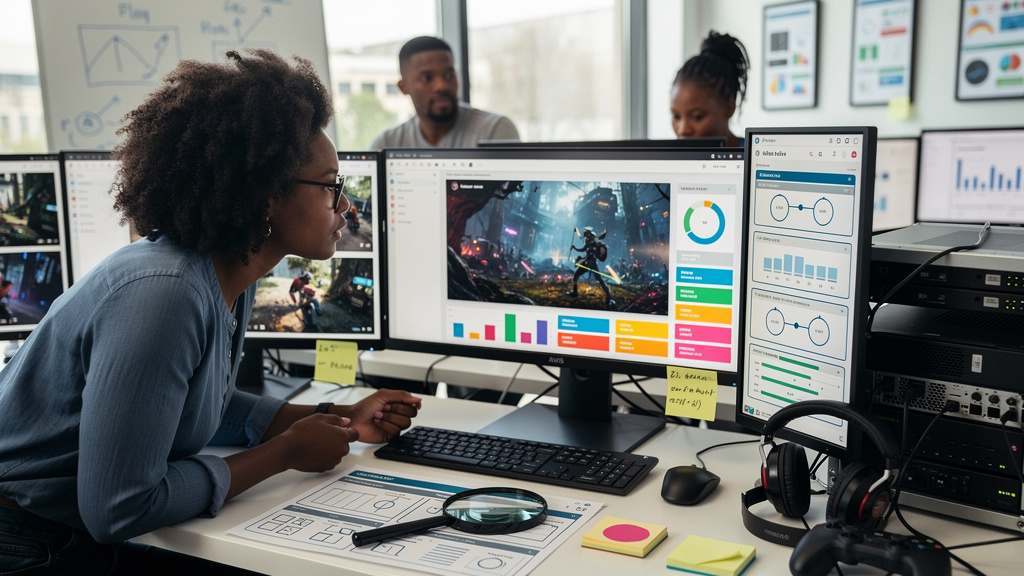
Every quarter I run the same experiment. I pick the next game I would buy blind, find its demo if one exists, and time myself. Twenty minutes is the cutoff. If the demo has not earned the purchase by then, I walk away, regardless of how pretty the trailer looked. The savings are not huge in the abstract, but the habit has changed the shape of my library in ways I did not predict when I started.
Most buying advice in gaming focuses on features. Frame rate, resolution, mod support, DLC roadmaps, review scores. None of that tells you whether you will still want to open the game in three weeks. The thing that tells you that is twenty minutes of your own hands on the keyboard, with nothing between you and the game. Screenshots and trailers sell the possibility. The demo sells the reality.
The math is the part that surprised me. A typical full-price launch is around seventy dollars. A typical impulse buy from a Steam sale is around fifteen. Multiply that by the number of games I would have skipped if I had bothered to test them, and the annual savings land somewhere between one hundred and two hundred dollars. That is a real number on a real budget, not a metaphor.
What the first twenty minutes actually tell you
The first hour of any game is the sales pitch. The third hour is when the systems start to bite. Twenty minutes sits in the awkward middle, which is exactly why it works as a filter. By minute fifteen you have seen the core loop three or four times. By minute twenty you know whether the loop is the kind of thing you want to do five hundred more times.
A few signals that twenty minutes reliably surfaces, in my experience:
- Whether the controls feel like an extension of your hands or like a barrier you keep bumping into
- Whether the audio mix gets tiring after a single quest or holds up for the long run
- Whether the difficulty curve ramps in a way that respects your time or punishes you for learning
- Whether the game respects your attention or assumes you will grind to make progress
None of those are things you can read in a review. Reviews describe what a game is. Twenty minutes tells you what it is like to be the one playing it.
Where the savings actually come from
The money I save is not from avoiding bad games. Bad games are easy to spot after the first refund window. The savings come from avoiding the middle tier, the games that are technically fine and personally wrong. The slot machine clone with a 96 percent return rate that bores you by minute ten. The open-world survival game with gorgeous art and a moment-to-moment loop that feels like work. The narrative adventure that everyone calls a masterpiece and you cannot get past the second act of.
Those middle-tier games used to fill my library. Each one was around twenty dollars and felt like a reasonable risk. Each one sat unplayed for six months before I deleted it. Multiply that pattern across a year and you get back the same one to two hundred dollars, just from a different category of mistake.
A demo does not protect you from bad games. Refund windows protect you from bad games. Demos protect you from the specific mistake of buying something you will not love, which is a different problem with a different cost.
Why demos also make you a better customer
Something I did not expect when I started the habit. Demos make me a more generous reviewer. When I buy a game after testing it, I tend to write a longer review, mention specific mechanics I liked, and recommend it to friends who I think will actually enjoy the same thing. When I buy blind, I tend to leave a one-line complaint and move on, because there is nothing specific to talk about.
The developer benefits too. A player who tested the demo and then bought is the kind of customer you want. They are less likely to refund. They are more likely to stick around for DLC. They are more likely to leave feedback that helps with the next patch. Compare that to the impulse buyer who refunds in the first hour because the game did not match the trailer, and the value difference between the two customers is enormous.
I have started to notice which publishers lean into demos and which avoid them. The ones who lean in are usually the ones who have figured out that the cost of a refund is higher than the cost of a missed sale. The ones who avoid demos are usually the ones whose trailers are doing the heavy lifting, which is itself a signal worth reading.
Trade-offs
Demos are not free in time. A good demo is around twenty minutes. A bad demo is around five. Even at the high end that is half an hour per game in your wishlist, which is real time. If you have forty games on your wishlist and you test every one before buying, that is twenty hours of demo time, which is a meaningful slice of a casual gaming week. The honest trade is paying time now to save money later, and the time cost is not zero.
Demos also do not always cover the late game. Some games change shape after the first ten hours in ways the demo cannot show. A demo that hooks you in twenty minutes can still lead to a game that loses you at hour fifteen. The demo tells you whether the opening is for you. It does not tell you whether the whole game is.
A few conditions to weigh before relying on demos as your main filter:
- Pick games whose demos match the structure of the full game, not a curated vertical slice
- Time yourself. Twenty minutes is a discipline, not a vibe.
- Skip the demo if the game is so cheap that the savings do not matter
- Trust the late-game reviews when they disagree with your demo impression
For most of my buying decisions the trade works out cleanly. For the handful of games where the demo was great and the full game was not, I have learned to read refund policies first and not trust the demo as a complete sample.
Coaches note. If a demo is missing for a game you want, that is its own signal. Some publishers refuse demos because their game does not hold up under ten minutes of unfiltered play. I have stopped buying games that have no demo available, no free trial, and no refund window. The combination is usually a red flag, not a coincidence.
What I keep around after testing
The other thing the habit changed is what stays in my library. Before I started, my library was a graveyard of mid-price purchases I had opened once and forgotten. After two years of testing first, my library is a much smaller list of games I actually replay. The replay count matters because it is the only real measure of whether a purchase was worth it, and it is the number no review aggregator will ever show you.
A library you actually use is worth more than a library you paid for. The first one compounds. The second one just takes up drive space.