
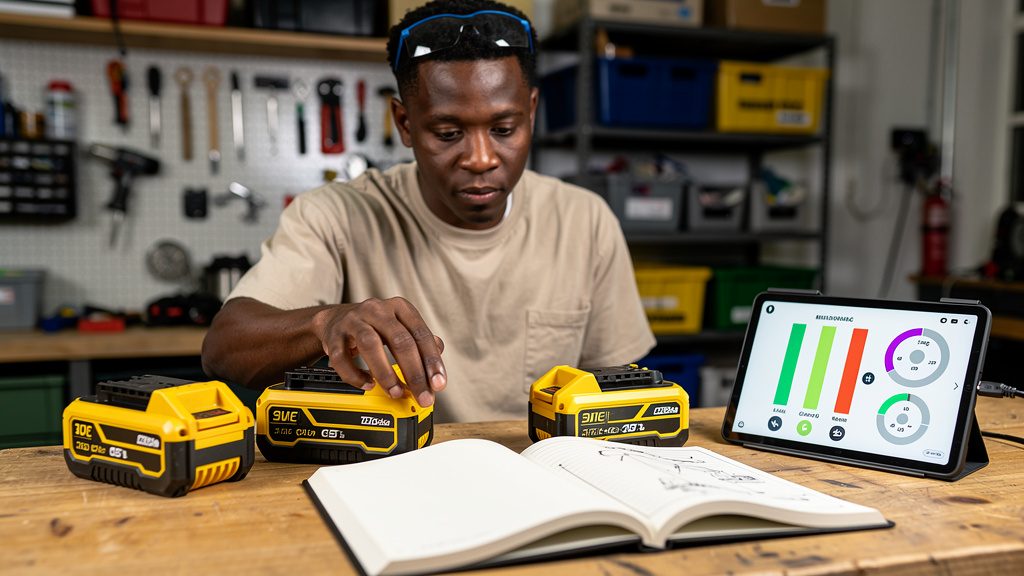
I have watched three different friends walk out of a hardware store with the wrong battery, and I finally understand why. The brand on the box is the same. The capacity on the label is the same. The price tag is the only thing telling the truth, and most people assume it is just dealer markup. It is not. DeWalt made a quiet change in April 2026 that puts three different cell chemistries behind one badge, and the cheapest pack on the shelf does the same work as the most expensive one for almost every homeowner who reads this.
Here is what I learned from watching each of those friends hand over their cards, and what I would do differently now that the labels no longer tell the story.
Why the price tag suddenly stopped making sense
Before April 2026, DeWalt sold its premium batteries under two distinct sub-brands: PowerPack (cylindrical tabless cells) and PowerStack (pouch cells). The shelf stickers made the choice easy. PowerStack cost more because it was a different shape and a different technology. PowerPack cost more because it delivered more current under load. A buyer could look at the label and know what they were paying for.
That ended this spring. Both sub-brands disappeared into the main XR line. A consumer walking into Home Depot now sees one wall of batteries, all stamped XR, with prices from $75 to $219 for a 5 amp-hour pack (a pack rated to deliver 5 amps for one hour, or 1 amp for 5 hours). The cheapest pack and the most expensive pack look almost identical from the outside. The middle buyer does what most people do: assume the cheapest one is the bargain, assume the most expensive one is for professionals, and pick whatever fits the budget. Both assumptions can be wrong.
What is actually different between the cells
Three battery constructions now share the XR name, and each one is a different answer to the question of how to deliver power to a motor.
The standard option uses 18650 cells, which are small cylindrical batteries about the size of a finger. They have powered cordless tools since the early 2000s, and the construction is well understood. Current flows in and out through welded tabs, which are thin metal strips that act like electrical highways. This is the base pack, sold at the $75 price point.
A premium option used to be sold under the PowerPack name. It still uses 18650-size cells, but the tabs are gone. Instead, the entire edge of the cell conducts current. That change removes a major source of internal resistance (the friction that electricity encounters inside the battery, which turns into waste heat) and lets the pack push more current without overheating. It costs more because the manufacturing is more demanding.
A third option used to be sold under the PowerStack name. Pouch cells are flat flexible batteries stacked inside the pack housing. This design lets DeWalt build thinner packs that fit into compact tools where cylinders would not. Pouch cells also have low internal resistance, similar to tabless designs.
The shared trait across all three is the slide-on rail that connects to XR tools. The battery that clicks onto a 2026 drill is the same shape as the battery that clicked onto a 2014 drill. That compatibility is the entire reason anyone buys into the XR platform.
How to decide which one you actually need
I ask three questions before buying a battery now, and the answers tell me which cell design is worth the money.
What tools do I own on this platform, and what kind of work do I do. Drilling screws, hanging things, and occasional trim work all stay well within the base pack’s comfort zone. Running a circular saw or a reciprocating saw for long stretches pulls high current, and the premium cells earn their keep there.
Where do I store and use the batteries. Cold weather matters more than people think. Pouch and tabless cells hold their voltage better as temperatures drop. If the garage is unheated in January and the project cannot wait, that is a real consideration.
How do I feel about waiting for the pack to cool. Premium cells accept a charge while still warm from work. Base cells want you to wait. If the work day involves cycling through one battery while the other charges, this matters.
If all three answers are “it does not matter much,” the base pack is the right call. None of these questions have a single right answer for every buyer, which is part of why the original sub-brand labels mattered in the first place, and part of why their removal makes the choice harder for people who do not have a strong opinion yet.
When the cheap pack falls short
The base option has limits worth naming, and pretending otherwise wastes your money.
- Heat is the most common issue. Run the base pack through a high-draw tool for ten minutes straight and it warms up faster than a premium design. The thermal cutout (a safety switch that stops the tool when the battery overheats) kicks in and you wait.
- Charging speed is slower. The same charger fills the base pack more slowly than the premium packs, because the cells are more sensitive to overcharging.
- Size options are limited. Compact tools that use the smaller PowerStack form factor will not accept the base 18650 pack at all. If you own one of those tools, the cheap option is off the table.
- Long-term storage in extreme cold shortens battery life regardless of design, but the base pack is more sensitive to it.
None of these are dealbreakers for a homeowner. They are real considerations for someone who depends on the tool for income.
A side note on the trap of “matching the brand”
There is one thing I have learned to ignore when buying into any cordless platform, and it is the advice that says “buy the matching brand.” Matching the platform is right. Matching the price tier is usually wrong. The brand-name premium battery costs more because it is built for daily professional use, and most consumers do not put their tools through that workload. A homeowner buying the $219 pack to use twice a month is paying contractor prices for homeowner use, and that math never works out.
The XR badge used to tell you what kind of cell you were buying. Now it just tells you the battery fits the platform. The cells inside are the only thing that tells you what you are paying for, and that is worth knowing before you walk up to the peg wall.
What I would tell past me
Buy the cheapest 5 amp-hour XR pack on the shelf and use it for a year. If you find yourself wishing the tool had more headroom under load, or if the pack gets hot during heavy work, then upgrade to the tabless or pouch version for the specific tool that needs it. That is the order I would buy in if I were starting a DeWalt collection today. The limitation worth accepting is that you may need to keep two cheap packs in rotation instead of one premium pack, and that is a fine trade.