
My AI agent sandbox bill was off by a factor of ten after two weeks. The agents themselves were doing nothing strange. They generated text, executed one command, examined the output, then iterated until the result looked acceptable. The vast majority of those iterations took roughly eight seconds. The actual work was negligible. The container layer wrapped around the work was not.
This is the post-mortem on what happened, what the move to a hosted Firecracker service taught me about metered compute, and where the self-hosted Linux runtime agentOS actually belongs in the menu.
Where the line item hides
Wiring a coding agent into a script means giving it shell access. Giving it shell access means giving it an isolated environment, because the agent’s output is not something you trust to run unconfined. That isolation layer protects you from the agent’s mistakes and from prompt-injection surprises (cases where a fetched web page or read file contains instructions that try to redirect the agent’s behavior), and it is also where the bill lives.
Docker is the default choice for that isolation layer, and for long-running services it is the right choice. The math stops working when the agent’s natural shape is a hundred tiny jobs per day. Every job pays for an image download, a container start, the actual command, and a tear-down. The container exists for a few seconds, but the boot cycle eats most of those seconds. Multiply that across hundreds of micro-jobs and the wrapper’s idle seconds dominate the actual work seconds.
A few mental shortcuts worth keeping in mind before you commit to a sandbox:
- Persistent agents that run for tens of minutes or hours per task are Docker’s sweet spot.
- Lots of small jobs per day are the worst case for any wrapper billed by the second.
- Hosted Firecracker vendors reduce boot to sub-second. The metering model still punishes short jobs.
- A local microVM runtime moves the cost from your wallet to your time. That is a real trade, not a free lunch.
The hosted experiment
The next thing I tried was the obvious move. I signed up for a hosted sandbox vendor whose backend runs Firecracker microVMs (Firecracker is the minimal hypervisor Amazon built for Lambda, designed to start a virtual machine in well under a second). The promise was simple. Fast boot, real isolation, no Docker daemon to babysit.
For about a week the numbers looked fine. Agents started in under a second, finished their short loops, and the environments tore down cleanly. I felt like I had finally landed on the right tool.
The billing dashboard told a different story. Even with sub-second boot, my usage profile was the exact shape that metered billing punishes. I was running hundreds of jobs per day at durations the pricing model did not anticipate. The vendor was not doing anything wrong. My workload was just shaped wrong for their pricing.
If you are about to do the same thing, the calibration check is short:
- Measure average job duration, not the cumulative compute time. The cumulative number looks reassuring. The average tells the truth.
- Multiply that average by the agent’s actual run frequency. The budget lives in the multiplication.
- Decide on day one whether you are paying a cloud invoice or spending time on operations. Both are valid. They are not the same.
Why agentOS exists in 2026
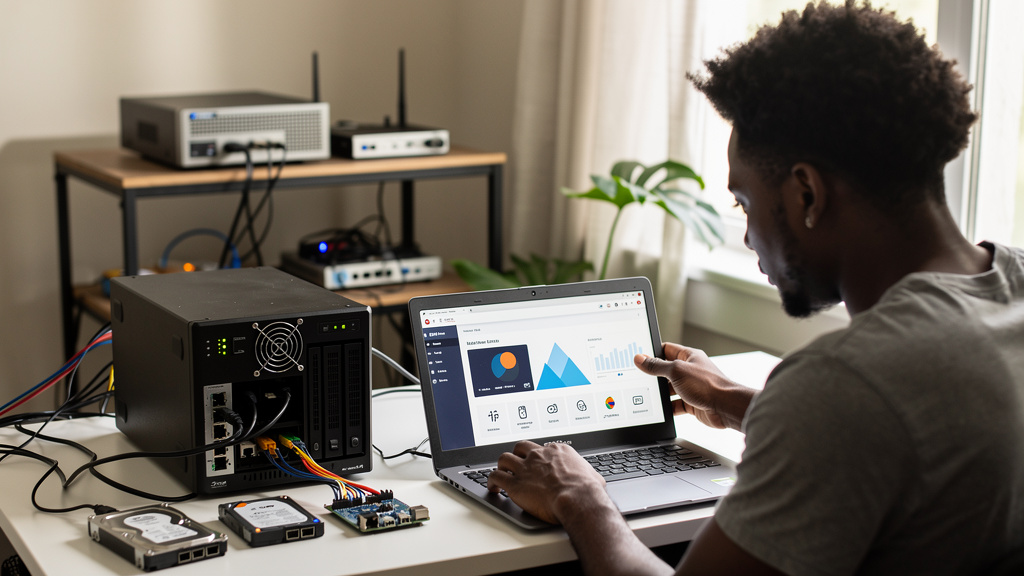
agentOS is a runtime that runs on a Linux box you already own, and spins up microVMs locally so agents can execute commands inside them. The pitch is not “free compute.” The pitch is that everything stays on your network. Tokens, prompts, outputs, credentials, and the audit trail of what the agent did all live on hardware you control. The runtime is something you can read, fork, and pin, which is the second half of the value.
The reason this is timely in late 2026 is that agentic workflows have stopped being a curiosity. Real scripts hand real work to agents. The agent reads the script, decides what to run, and needs a safe place to run it. A direct shell on production is reckless. A per-job Docker container is the wrong shape. A purpose-built runtime that boots a microVM in roughly a second on a local box is the middle ground.
The honest trade-offs you should weigh before committing:
- There is a hardware floor. A multi-core machine with 32 GB of RAM is a sensible starting point.
- The convenience of a hosted vendor disappears. There is no support team to escalate to.
- Zero-day patches (security fixes that land the same day a vulnerability goes public, before vendors have time to push coordinated updates) become something you read about, evaluate, and apply on your own schedule.
- The win is data locality. Whatever the agent touches stays on your network.
For personal projects and small teams, that is a great deal. For a production fleet with an on-call rotation, it is a commitment. Plan accordingly.
When agentOS is the wrong tool
I like the project and I want to be honest about where it does not fit.
If you only need to fire one agent a few times a day and you do not care about data leaving your laptop, plain Docker is still the lowest-friction answer. You already have it. The image is already cached. Adding a new runtime on top costs more time than it saves.
If you are running a product whose sandboxes need to be physically close to users around the world, you should pay a hosted vendor. Spinning up microVMs on a closet box does not give you an edge presence. It gives you a closet.
The middle is where most people actually live. A handful of short agent jobs per day, a Linux box on your desk or in a closet rack, and a willingness to read GitHub issues when something breaks. That is where agentOS is genuinely good.
A rough guide I now keep in my head:
- A single agent running a few times a day on a laptop: Docker, move on.
- A handful of short jobs per day and budget pressure:
agentOSon a small dedicated box. - Sensitive workloads or networks that are deliberately disconnected from the public internet for compliance:
agentOSor an equivalent local microVM runner. - A production agent fleet with global users and uptime targets: a hosted vendor plus a real operations team.
Trade-offs to plan around
Each option has a real cost worth naming up front.
Staying on Docker is honest. The bill climbs as the agent runs more. The wrong move is to optimize the wrapper layer before optimizing the workload itself. Most of the time the right fix is fewer, longer agent runs, not a faster container.
Going hosted trades the per-job cost for a metered invoice. The technology is excellent. The pricing assumes serverless-shaped work (think AWS Lambda: short, stateless, on-demand), not a Python script in a tight loop. If your agent’s natural rhythm is the second one, the invoice will outpace your dashboard’s warnings.
Going self-hosted with agentOS trades the invoice for your time. Hardware fails. Kernels update. MicroVM boot paths occasionally regress on a new Linux release. Budget for it, or pick a hosted option and accept the bill.
None of those are technical choices. They are personal ones, and they are easier to make with an honest read on your workload before you commit.
What I would tell past me
Sort the choices by the shape of your workload, not by the cleverness of the demo video. For most people that means Docker plus a clean image plus a reasonable timeout. When the workload gets short and frequent, switch to a microVM-based runtime. Whether you pay a vendor or run it locally depends on your budget, your spare hardware, and how much you care about keeping data inside your own network. Those are not technical questions. Answer them on purpose.