
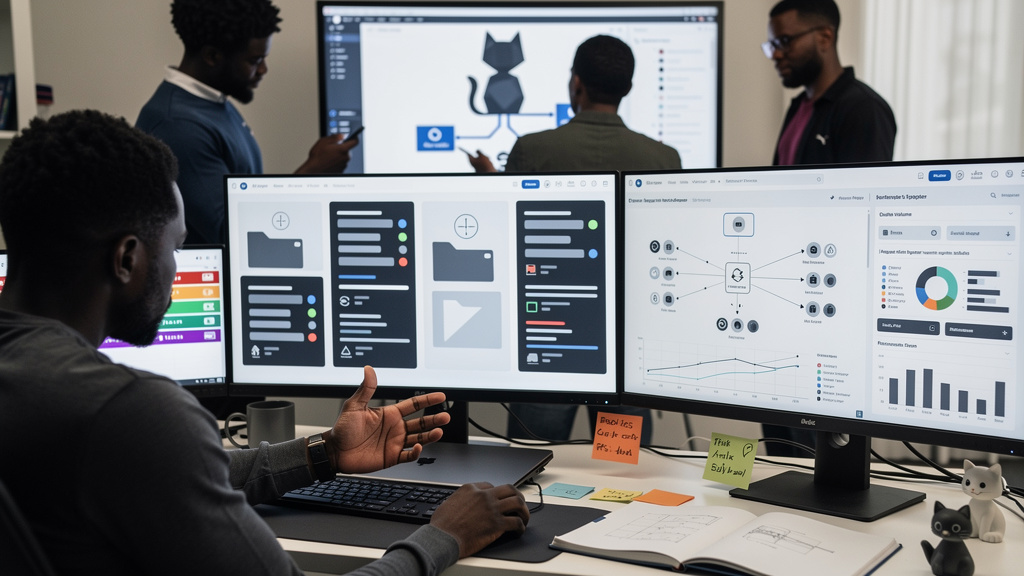
A single Tuesday afternoon in August 2026 is now the reference case for “what happens when the platform goes down.” For seven hours and forty seven minutes on August 17, GitHub’s authentication layer, Actions runners, APIs, pull requests, issues, and Copilot all stopped working at the same time. The second major outage of the month, on the heels of the August 6 Actions incident, made it impossible to keep pretending that any of these systems are independent.
This piece is not another retelling of the postmortem (the written analysis of what broke, why, and what changes will prevent it from happening again). It is about what you should change on your own team so the next bad Tuesday is one you push through, and the trade-offs of each change so you can pick the one that fits your stack.
Why this outage is a different kind of wake-up call
Most platform outages are scary in the moment and forgettable a week later. This one is going to stick around for a while, because of the second incident on August 6. Two outages inside a single month, in the middle of a public push from GitHub leadership to harden reliability, tells you the work is not finished. It also tells you that whatever your architecture diagrams say about independence, your real workflow depends on a small number of vendors operating correctly at the same time.
What made August 17 land differently for most teams:
- Authentication, code hosting, CI (continuous integration, the automated build-and-test system that runs on every code change), AI assistance, and pull request review all sit inside the same vendor
- When authentication broke, the cascade took pull requests, issues, Actions, and Copilot with it
- For developers working in US time zones, the failure landed at peak working hours, which is exactly when tooling failures cost the most
The published numbers are not the important part of this story. The interesting question is what you change on your own team before the next outage happens.
The four practices the outage makes non-optional
The honest version of how to think about this is a short list of practices the outage makes non-optional. Each one is small. None of them require permission from above. They are listed in order of how much benefit each one gives you per hour spent.
A quick comparison before we get into the details:
- Local mirror: cheapest, smallest benefit, prevents one specific failure mode
- Workflow documentation: medium cost, medium benefit, surfaces gaps you did not know you had
- Offline-capable local environment: low cost, medium benefit, prevents productivity stalls during outages
- Postmortem read + questions: cheapest of all, biggest benefit per minute spent, starts conversations that would not happen otherwise
Mirror the critical repos locally
Run git clone --mirror on every repository tied to a deploy pipeline. Put the mirror somewhere you control, on infrastructure that is not GitHub. The cheapest version is a personal laptop with a cron job that runs git fetch --all once an hour. The more robust version is a second remote on a different vendor.
The mirror only matters if you actually push to it and pull from it during an outage, which means you need to rehearse the recovery path before you need it, not during. Most teams never rehearse. That is the part that fails when the real outage happens.
Document the workflows that have no fallback
Open your GitHub Actions inventory. Find the workflows that actually block a release. For each one, write down what the manual fallback looks like. “If Actions is down for two hours, here is the bash script we run on a developer’s laptop to deploy.” Most teams discover that one or two critical pipelines have no fallback at all. Documenting those gaps is the work that pays off the next time a vendor wobbles.
The exercise takes about an hour for a small team. The output is a one-page document that anyone on the team can read in five minutes. It is the single most valuable artifact your incident response can produce.
Keep a working local environment without network-dependent tools
Most developers reach for AI assistants by reflex after a few months of use. Replacing that reflex with a different workflow takes deliberate practice. The cheapest version is to spend one afternoon per week working without Copilot or any other network-required tool, so your hands remember how to write code without it. The more robust version is to make sure your editor, build tools, and test runners all work offline.
This is the cheapest habit on the list. It is also the one that requires the most discipline, because the AI tools are genuinely faster when they work. The point is not to abandon them. The point is to make sure you can still ship when they do not.
Read the postmortem and write down three questions
GitHub published a detailed timeline on the company blog. Read it. Write down three questions you now have about your own platform’s scaling assumptions. The questions are usually uncomfortable. The answers usually lead to a small audit of capacity, redundancy, and failure modes on your own infrastructure.
The audit is not the point. The point is that the postmortem triggers a conversation on your team that would not happen otherwise. Most platform outages are forgotten a week later because nobody wrote down what they should change.
Trade-offs
Each practice in this list has a real cost.
A local mirror means another storage system to maintain, another backup to verify, and another thing that can drift out of sync with the canonical remote. The cheapest version is a personal laptop with hourly fetches, which works for a solo developer but does not scale to a team. The team version is a second remote on a different vendor, which costs a small monthly fee per developer and adds an hour per week to keep the mirror aligned.
Documenting the workflows that have no fallback sounds easy until you sit down and try it. The first hour is easy. The second hour is uncomfortable. The third hour is when you find the workflows that have no fallback at all, which is the work that pays off the next time a vendor wobbles.
Keeping a working local environment without network-dependent tools is the cheapest habit on the list. It is also the one that requires the most discipline, because the AI tools are genuinely faster when they work. The point is not to abandon them. The point is to make sure you can still ship when they do not.
Reading the postmortem and writing down three questions takes an hour. The follow-up audit usually takes a day. The questions tend to surface the things you already knew were wrong but had not written down.
If you are a solo developer with one or two repos and a single deploy target, the local mirror is the only one that matters. If you are running a team of ten or more with shared CI pipelines, all four practices are worth the time. For a team of any size, the cheapest practice is the local mirror, and the most valuable one is documenting the workflows that have no fallback.
Bottom line
The lesson of August 17 is not that GitHub failed. Every platform fails sometimes. The lesson is that the modern developer’s stack has more single points of failure than we admit, and we mostly ignore them until a Tuesday afternoon when we cannot push code. Pick one of the actions above and actually do it this week. The cheapest one is the local mirror. The most valuable one is documenting the workflows that have no fallback. Both take less than an hour. The next outage is a matter of when, not if, and the team that has rehearsed the recovery is the team that ships on schedule when it happens.