
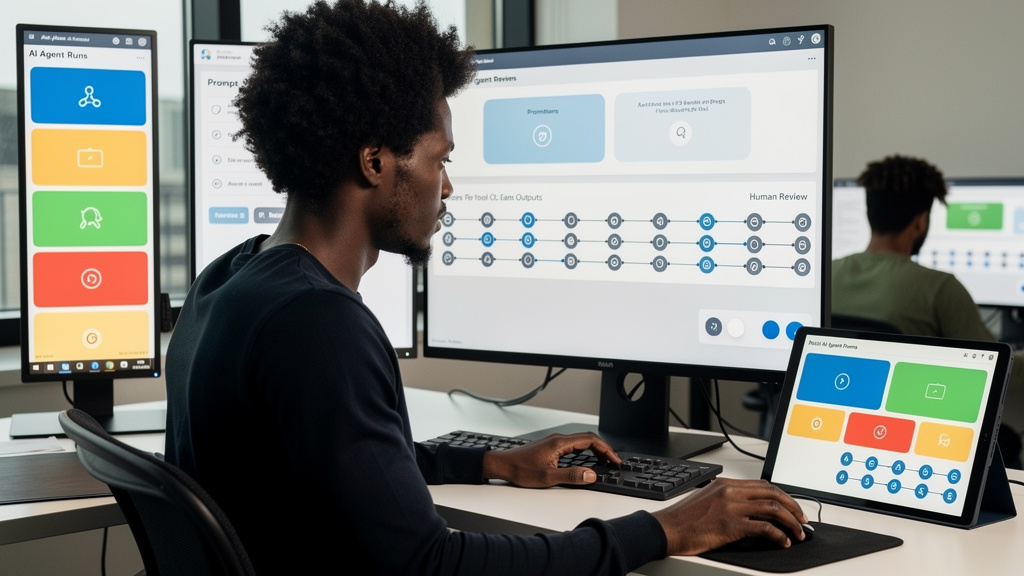
Google shipped three Gemini Flash models in roughly six weeks. That is the headline, but the cadence is the lesson, because most builders are still budgeting for a model choice once a year when the labs have moved on to a model choice every few weeks.
If you pay attention to AI announcements at all, you have noticed that the rhythm has changed. A few years ago a new flagship model was an event. You read the launch post, looked at a leaderboard or two, ran a handful of prompts, and that model sat at the top of your stack for the next six months. That assumption is wrong now, and the cost of holding onto it is a stack that quietly ages out from under you.
This article is about what the new cadence looks like in practice, why the Flash tier (the smaller, cheaper workhorse models below Google’s Pro and Ultra flagships) is the tier that matters for most production systems, and how to build so you can absorb the next drop without rebuilding your product.
The old model of “picking a model” is dead
Pick your model was an annual thing because the labs were annual. Each major release meant a round of evaluation, a migration plan, and a calendar marker for the next one. That worked when the competitive floor was stable. It does not work now because the floor is moving every few weeks, and the team that owns the model decision is no longer the team that owns the budget.
The result is a quiet shift in who actually picks models inside a company. A year ago it was a CTO call. Today it is closer to a platform-engineering call, and the question is less “which one” and more “what is the upgrade path.” Whoever owns the upgrade path owns the abstraction layer over whichever vendor the rest of the team calls.
What Flash actually means has shifted too. Flash used to be a polite shorthand for “the cheap one.” It is now the workhorse tier, optimized for latency and cost, and the majority of API calls against Gemini (and most of your end users’ interactions with Google AI tools) flow through Flash, not the flagship Pro or Ultra models. That makes a Flash release more impactful for most production systems than the occasional flagship drop, and it makes the release cadence of Flash the operational fact that matters.
- Three Flash variants in six weeks is the new normal, not a one-off sprint by Google
- The tier that handles your day-to-day API calls is the tier that changes most often
- A leaderboard score from last month is a weaker signal than a per-token price drop this week
- Pick-the-model-once thinking ages your stack faster than it saves engineering time
- An abstraction layer over the model vendor is no longer optional for any serious builder
What the new cadence looks like in practice
There are three things that show up with every Flash drop, and each one costs engineering time if you are not prepared. The first is benchmark shifts. The model you evaluated six weeks ago is no longer the model on the dashboard. Sometimes it is better. Sometimes it is worse on the specific workload you care about. You do not know until you re-run.
The second is pricing shifts. Per-million-token prices move with each release, sometimes more than once between releases. A vendor that drops a price mid-cycle, which Google and the other labs do, can quietly invalidate your cost projections. If you are running a thin margin product on AI, that is not a footnote. It is your unit economics.
The third is behavior shifts. Smaller, faster models are more sensitive to prompt phrasing than the flagship tier. A small behavior change between releases can break a prompt chain that worked fine last month. The fix is rarely “rewrite the prompt,” and the fix that actually works is regression coverage plus a fast path to detect the change.
Teams that handle this well have stopped treating a model release as a one-time decision and started treating it as a recurring maintenance task. The maintenance task has three parts: re-run your eval suite against the new model, check the price against your cost projections, and decide whether to swap. The whole loop should take an afternoon per release, not a quarter.
Build the abstraction layer first, then pick the model
The cheapest insurance against the new cadence is a thin wrapper (a small layer of code that hides which vendor or model you are calling, so the rest of your codebase does not have to care) over whichever model vendor you call. The wrapper does three things. It pins a specific model version in code, not just a model family. It logs the model name and version with every request, so when something breaks in production you can answer “what were we calling at 3am” without guessing. It gives you a single place to change the model when the next Flash ships.
The lock-in question is real but it is the same lock-in you already accept for source control, CI, and observability. The vendor knows your workflow. You probably cannot move without pain. The honest question is whether the vendor’s workflow matches what you would build yourself if you had the time. For most teams, the answer is no, and the abstraction layer is a one-afternoon build that buys you a swap-the-string upgrade path.
If you are a consumer and not a builder, the cadence still matters. The AI tool you used last week will be a little worse than the tool you could use next week, and the gap keeps closing. That is good news if you are paying for a tool. It is bad news if you signed up for a lifetime AI subscription, because the floor keeps rising under you.
- Pin a specific model version in code, not a model family, so swapping is a one-line change
- Log the model name and version with every API request, for your own debugging
- Re-run your eval suite on every vendor release, not just on flagship drops
- Treat per-token pricing as a moving target, not a fixed assumption
- Skip lifetime AI subscriptions, because the floor moves faster than the contract
What I would tell past me about the cadence
I used to treat model releases as events. I would block a week, read the announcements, run the new model against a few favorite prompts, and pick a winner. The winner would live at the top of my stack until the next release, six months later. That rhythm does not exist anymore. The labs ship faster than I can evaluate, and the ones that ship fastest are the ones whose tools I am actually using day to day.
The change I made was small and unglamorous. I built a thin wrapper, set up a regression suite that runs in under an hour, and stopped treating the cadence as a thing I had to keep up with. I check Flash once a month, re-run evals if a release looks interesting, and update the pricing spreadsheet. That is the whole job. The rest of the time I build.
Trade-offs
- Fast release cadence is good news if your stack can absorb it, and bad news if it cannot. The fix is process, not heroics.
- An abstraction layer adds a small amount of indirection (an extra hop where your code goes through the wrapper before reaching the model) in exchange for swap-on-day-one. Most teams should pay that cost.
- Per-token pricing moves faster than most budgeting cycles. Plan for it as a range, not a number.
- A monthly check-in is enough for most teams. Daily model-chasing is a tax with no return.
The right move is to design for the next switch, not for the current model. The labs have made that choice for you, and the only question left is how much friction your team feels when the next Flash ships.